Best Accountability Training Practices for Busy Professionals
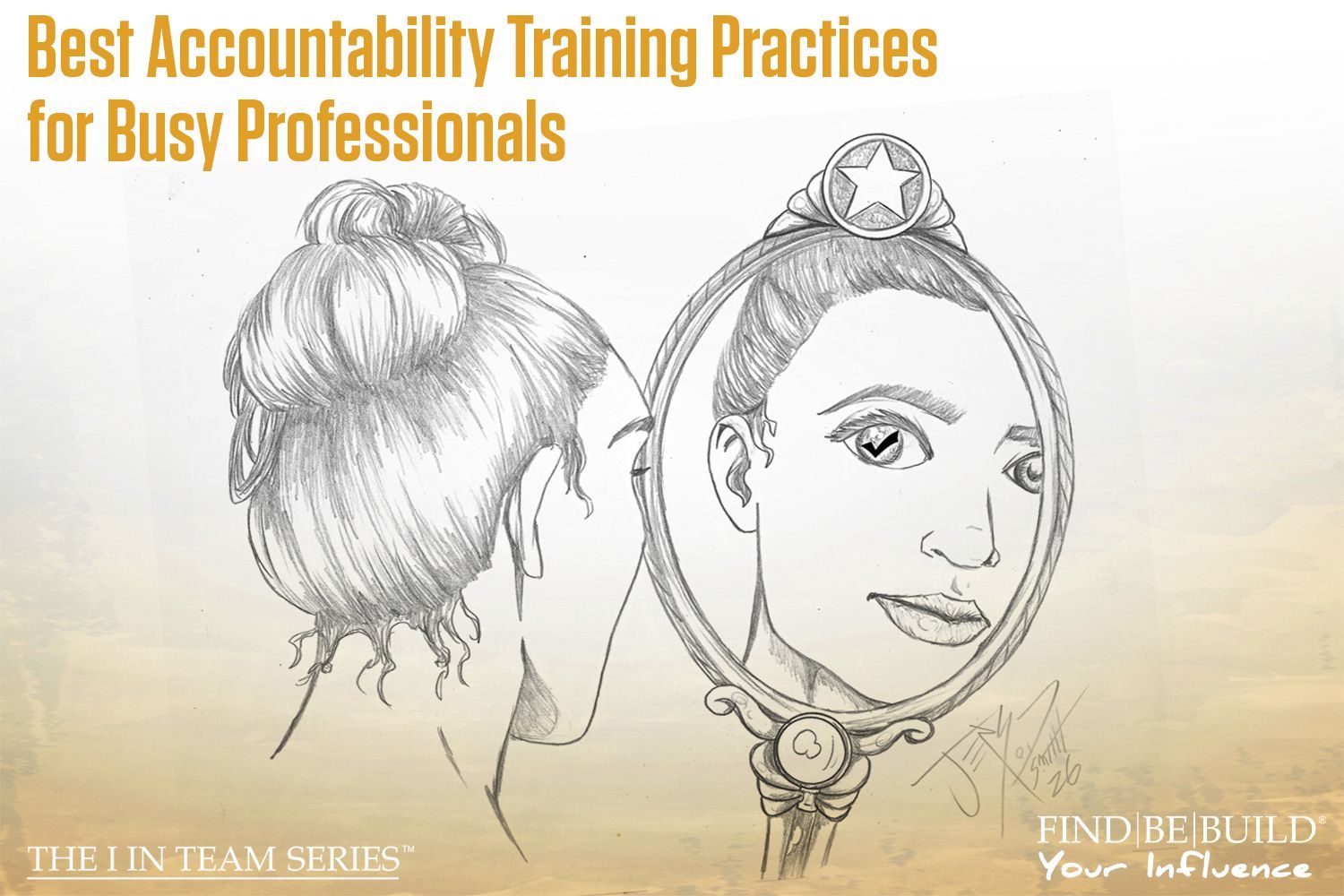
Howdy, team, and happy February! It’s me, Mary, here to share more insights about how you can Find, Be, and Build your positive influence. Our team is currently reading the I in Team series in our weekly Gratitude Group, and one topic that continually comes up is accountability. This loaded word can make busy professionals shy away from committing to both self and outsourced accountability, but did you know accountability can actually be really easy? I am here this month to share with you some of our best accountability training practices so you can maximize your time and reduce stress.
Outsourced Accountability
Choose someone in your life that you can rely on to help you when you need an extra boost. This social pressure will help hold you accountable to your commitments. This can be as light or as intense as you need. For some, having a personal assistant who has access to your entire to-do list and schedule is required. For others, simply stating, “I am going to finish X task by Friday. Can you please check in with me on Monday to see how it went?” is sufficient. Outsourcing your accountability helps build your professional identity and demonstrates to others that you are a person who does what you say you will do.
Weekly Accountability Check-in
This accountability training practice can be done alone or with a small group of peers. Set aside 15-30 minutes every week to review the following:
- What did I commit to this week?
- What did I complete?
- What prevented me from completing any tasks?
- What are my commitments for next week?
It works because it creates the habit of accountability. Consistency is key. By keeping accountability at the forefront of your week, it becomes an ingrained practice rather than something you are simply striving to do.
Built-In Rewards (and Consequences)
Rewards and consequences are excellent motivators for accountability training. The key here is to make the rewards and consequences something you feel deeply about rather than having them be symbolic. Tying emotion to this helps instill urgency and create meaning. Below are some examples of emotional rewards and consequences. You know yourself best, so get creative!
Rewards
- Share your wins with your team for public recognition / praise
- Schedule guilt-free rest time
- Upgrade a tool or item that you use daily
Consequences
- Donate to a cause you do not care about (make it an amount that stings)
- Self-awareness journaling time (What excuses did I use? What was I avoiding? What will I change in the future?)
- Share your mistakes with your team and invite feedback
Calendars and Commitments
Busy professionals don’t simply remember things; they rely on tools to help them. Your calendar should be your best friend if you want to remain accountable to your team and projects. Time block your meetings, commitments, and work time. If you notice you have availability on your calendar, block it off for a project and use that time to only work on your project. When needed, reduce your commitments. It’s okay to say no! Overcommitment kills accountability. We only have so much time in a day, use your wisely.
Accountability Training Bottom Line
The best accountability training requires minimal time, creates visibility, and enforces clear rewards and consequences. You don’t need to spend hours every week being accountable to yourself, your team, and your commitments. By making it a habit and keeping it at the forefront of your mind, you can make accountability your next best skill.
If you’re in need of an outsourced accountability partner, IA Business Advisors has been helping leaders around the world for 30 years! Contact us below.