How to Build Motivation and Morale on Small Teams

Mary Griffin • April 29, 2026
How to Build Motivation and Morale on Small Teams
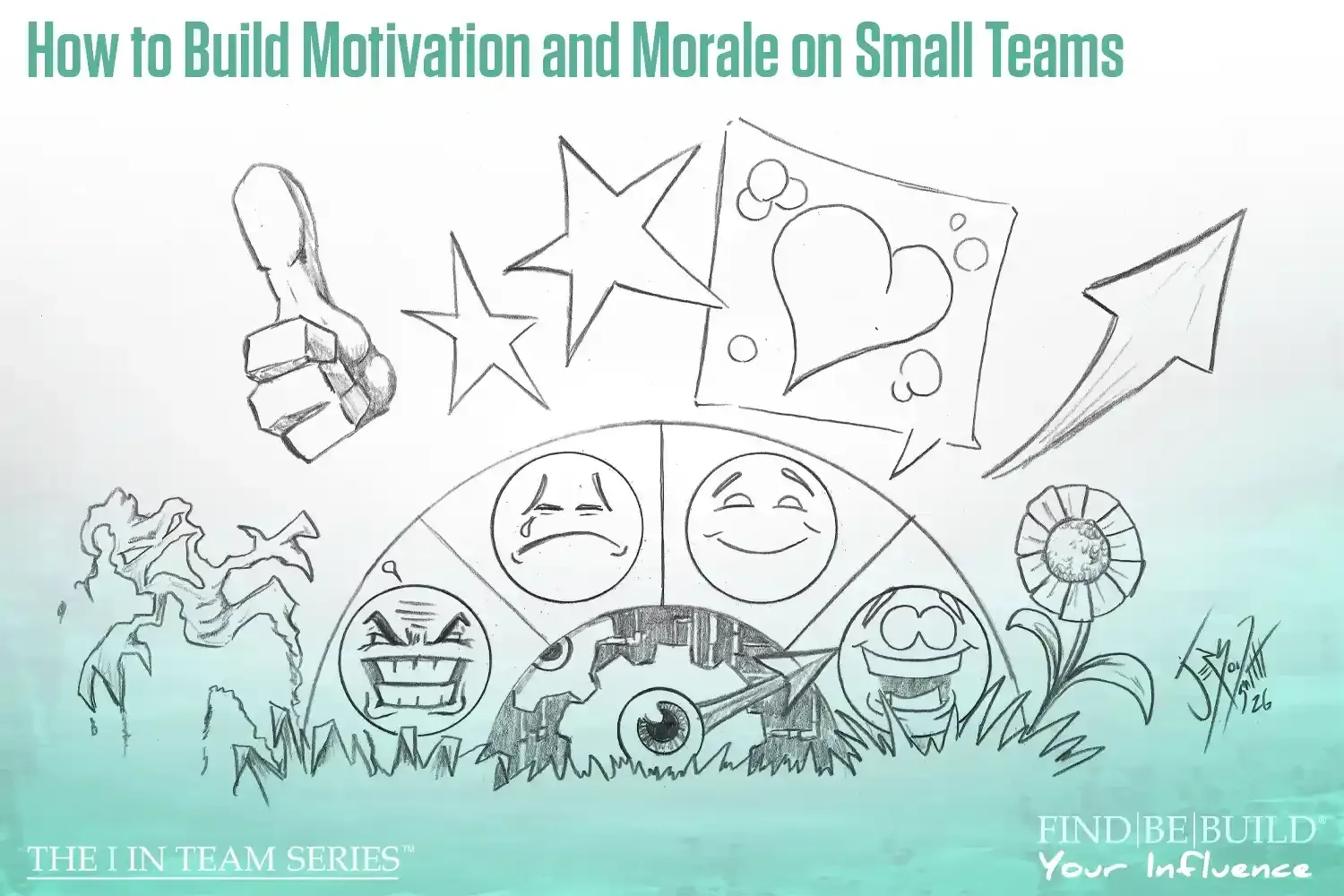
 Happy May! Mary here and I’m back to share more positive influence with you. Every month, we explore how you can FindBe, and Build your positive influence. With spring in the air, there is a newfound sense of renewal. Now is the perfect time to build motivation and morale on your small team.


Clear Purpose and Ownership

People are more motivated when they understand why their work matters and what tasks they are responsible for. When assigning or delegating tasks, be sure to explain how those tasks tie into the mission of your organization. Do not micromanage! Micromanagement often drains motivation quickly. Always give full responsibility and accountability to the person who owns the tasks; this includes the outcome of that task. If you want to build motivation and morale, let people decide how to tackle their tasks.


Recognize Progress

Leaders must recognize their team’s efforts, even before results. Waiting for a big win can kill momentum. Teams need a boost of energy through their small wins to keep them motivated to reach the end goal. When their work begins to make an impact, be sure to give them S.M.A.R.T. praise! You can praise them specifically for the work they are putting in and encourage peer-to-peer recognition.


Small teams thrive on strong relationships, so by strengthening peer connections, you build motivation and morale. Other options for keeping everyone connected include:

  • Team retreats or events
  • Weekly check-ins
  • Gratitude group


Build Psychological Safety

Psychological safety occurs when team members feel valued and safe with their organization. This includes creating a safe environment for everyone to voice their opinions, normalizing mistakes as learning opportunities, asking for input directly, responding to ideas with curiosity instead of judgment, and more.

You can also build motivation and morale by investing in your team’s growth. People stay motivated when they feel like they are progressing. Offer opportunities for additional assignments, continued education courses, or mentorship programs. Instilling a growth mindset in every team member will keep morale high while simultaneously building a high-performing team.


Remove Friction

Nothing kills motivation faster than a roadblock that can’t quickly be solved. If a process or tool is broken, fix it immediately. Save time by planning meetings ahead of time and staying on schedule. When necessary, remove tasks that no longer have value. Additionally, you can remove friction and boost motivation by staying transparent with your team. Be honest with them and provide open communication. The smoother everyday feels, the more morale will go up.


Lead with Consistency

Leaders create culture. This means that leaders can create good and bad cultures. Show up for your team and be consistently positive about your work together. Be prepared and focused during meetings, treat people consistently to demonstrate what behaviors are and are not tolerated, and address any issues early rather than allowing them to fester. Consistent leadership helps teams feel safe even in times of uncertainty.


How to Build Motivation and Morale: Bottom Line

Consistent, intentional leadership is how you build motivation and morale on your small team. By removing friction, defining ownership, delivering praise, and building a culture of safety, your team will be re-invigorated. If you need help with tailoring an employee retention plan, IA Business Advisors would love to assist you. We can design an engaging, morale-boosting plan for your small team today.
Learn More
Internal resistance
By Mary Griffin April 1, 2026
Reducing internal resistance to organizational change requires communication, presence, compassion, accountability, and teamwork. Follow these tips.
Illustration: A person looking in a mirror. Text: Best Accountability Training Practices for Busy Professionals.
By Mary Griffin January 22, 2026
Accountability training requires minimal time, creates visibility, and enforces clear rewards and consequences. Start training today to increase productivity.
Drawing: sunflower heart with a cupcake, star, and lightbulb on branches.
By Mary Griffin December 30, 2025
We are all in need of more fun in our lives, so by implementing some positive workplace initiatives, you can make your workplace more enjoyable for everyone.
Warrior holding a
By Mary Griffin December 11, 2025
You don't need to put up with repeat issues. With a business operating system, your company can maximize profits, align your team, and scale comfortably.
Hands connecting puzzle pieces forming a bridge to a mountain peak. Title: Succession Planning.
By Mary Griffin October 31, 2025
Beginning years in advance of departure, succession planning for leaders will ensure business continuity, preserve culture, and empower employees.
By Mary Griffin September 30, 2025
Cash flow management is understanding how money flows in and out, tracking expenses, and projecting what may happen in the future based on the past.
By Mary Griffin August 30, 2025
Developing a strategy for team collaboration training can improve alignment, accountability, and trust. With these tools, teams become high performing.
A man holding a flag and a megaphone.
By Mary Griffin July 25, 2025
Learn how positive habits like active listening and mindfulness can strengthen leadership communication skills and improve team outcomes.
Employee Engagement & Retention
By Mary Griffin June 26, 2025
Reducing employee turnover is a byproduct of intentional influence. Mentorship programs nurture teams, strengthen culture, and support long-term retention.
By Mary Griffin May 29, 2025
Hello, team! Mary here, continuing our journey through the I in Team series, where we challenge and empower you to Find , Be , and Build Your Influence. One of the most common things we’re asked to help our clients with is toxic workplace recovery. This directly connects to the culture of the team, and while rebuilding that culture takes time and intention, it is absolutely possible. In fact, with the guidance of our I in Team approach and S.M.A.R.T. Management system, we’ve successfully helped more than 19,000 teams evolve into high-performing, values-based cultures. If you’re ready to take the lead and breathe life back into your team, we’re here and ready to support you. Practice Emotional Intelligence One of the most impactful steps you can take on your toxic workplace recovery journey is to practice emotional intelligence (the ability to recognize, understand, and manage both your own emotions and the emotions of those around you). Toxic environments are often the result of emotional disconnection, poor communication, unnecessary competition, and a culture that avoids constructive feedback. Begin by shifting your perspective: respond with empathy, ask thoughtful questions, and use “I” statements. These habits model two traits, emotional regulation and empathy, that influence how your team interacts and solves problems. Start small. For example, set a personal goal to give one piece of sincere praise or recognition per day. This is a S.M.A.R.T. goal, and it starts to reinforce positive emotional exchanges. Over time, this contributes to a psychologically safe environment where people feel seen and supported. Foster Open Communication Once emotional intelligence begins to take root, toxic workplace recovery is just around the corner. Open communication becomes more natural because when team members are aware of their own and others’ emotions, communication becomes seamless. The number one rule? Listen. Really listen. Without listening, communication is incomplete. Try implementing monthly influence partnerships—team pairings that rotate so members can get to know each other beyond surface-level roles. This creates connection and, when done with consistency (Timely), fosters trust across your team. Another way to build open communication is by creating a structured feedback loop. Clarify how and when feedback should be given—perhaps during weekly one-on-ones or monthly review meetings—and make sure all team members understand the difference between criticism and constructive feedback. S.M.A.R.T. feedback is Specific and Relevant, and when delivered with respect, it encourages team members to grow without fear. Lead by Example As we say throughout the I in Team series, everyone is a leader regardless of title. Whether you’re in the C-suite or just starting your first job, how you show up directly shapes the culture of your team. To begin, set some respectful boundaries rooted in your values. Let others know what you need to succeed and what behaviors support or disrupt your work. When disagreements arise, demonstrate what respectful disagreement looks like—calm, focused on solutions, and free from personal attacks. If your workplace has leaned into competition, shift the focus to collaboration. Collaborate on micro-goals, like shared tasks or cross-functional projects. Make the results Measurable and celebrate wins together (publicly, if possible). Consider S.M.A.R.T.-based team-building events (like problem-solving challenges or goal-setting workshops) to reinforce collaboration in a meaningful way. Final Thoughts Toxic workplace recovery starts with you. Every interaction, every word, every moment of listening is a chance to model what’s possible. Show up the way you want others to show up. If your team is struggling to rebuild or you need expert guidance, reach out . We’re here to help. Let’s keep influencing responsibly and positively together.