9 Misconceptions About Core Values Implementation
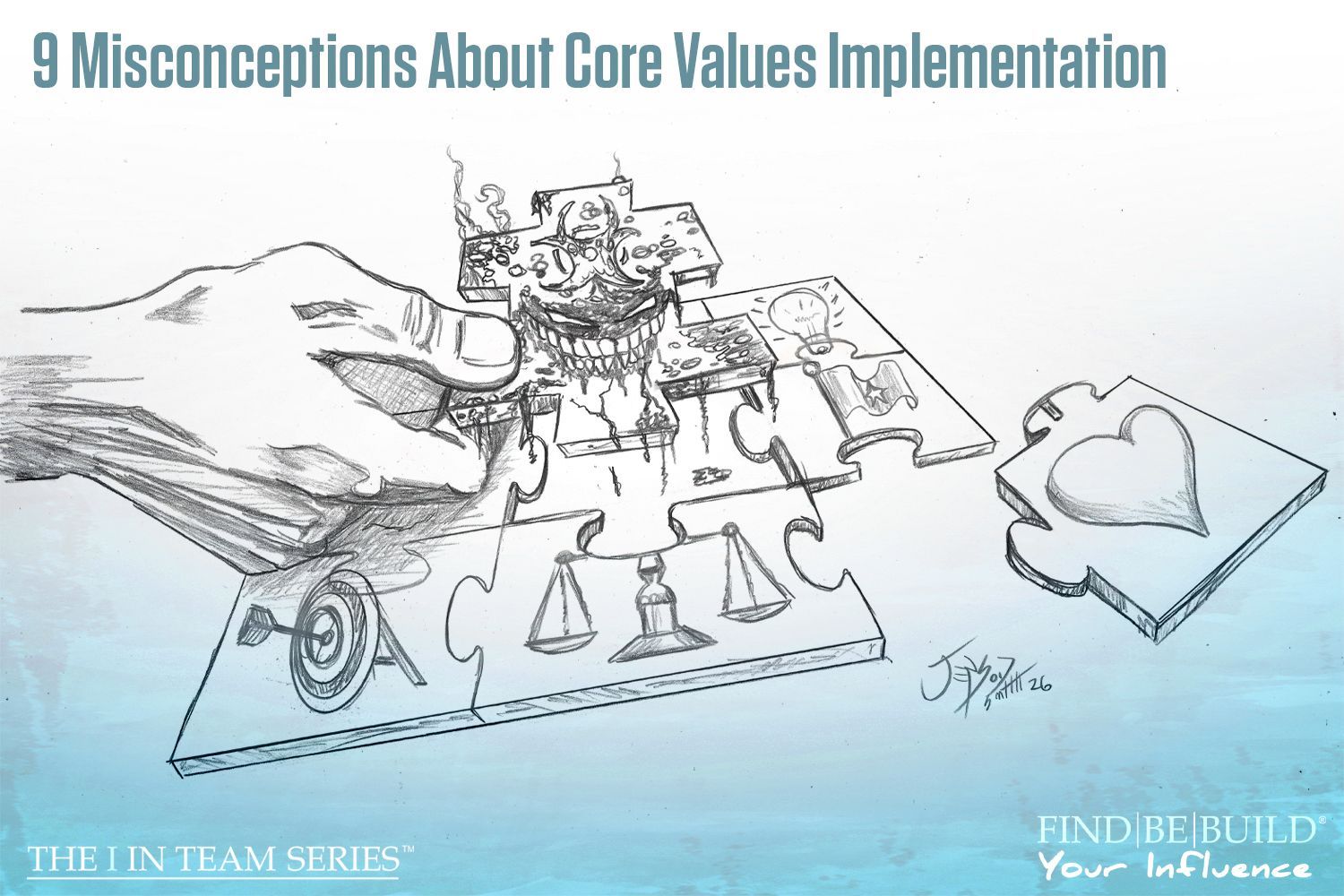
Hi, team! It’s time for another month of learning and influence. Core values implementation is a necessary and valuable action for organizations. However, there are several misconceptions around this practice.
Employees Will Adopt Core Values Easily
Simply communicating a value, such as accountability or respect, doesn’t make people behave accordingly. Teams need clear examples of values in action. They learn what an organization truly values by observing its decisions, behaviors, rewards, and consequences.
Displaying Values is Enough
A beautifully written and displayed list of core values does not create culture. If you want to take core values implementation seriously, you need to continually reinforce them through hiring, onboarding, performance management, recognition, communication, and leadership behavior.
Values Need to Describe Who You Are
If you’re looking to define core values, don’t fall into the trap that they can only describe what you are now. Yes, core values can reflect strengths, but they can also represent who the organization wants to become. The gap between current and desired performance provides direction for core values implementation.
Core Values Cannot Change
Core values should provide stability, but organizations can revisit them as their mission, workforce, customers, and other circumstances evolve. Changing a value thoughtfully isn’t necessarily a sign of inconsistency.
Only Leaders Should Demonstrate Values
Leaders may establish organizational values, but it’s everyone’s responsibility to demonstrate them. Culture is created and reinforced by everyone.
Leaders Are Exempt
A common core values implementation misconception is that leaders are exempt from values. This is just as damaging as the last misconception because it places responsibility on one party.
More is Better
Having a long list of values can make them difficult to remember and prioritize. A smaller number of meaningful values—supported by clear behavior—is more influential.
Values Should Function as Disciplinary Tools
Using values only as words against someone when they make a mistake is wrong and undermines the value itself by attempting to use it as a weapon. While they can be used to supplement disciplinary action appropriately, it shouldn’t be the only tool. Plus, values should be used to recognize positive behavior, guide decisions, celebrate accomplishments, and reinforce the culture the organization wants to build.
Values Replace Policies
Values provide direction, but they can’t compensate for poor management practices, unclear expectations, inadequate communication, or inconsistent policies. Culture and systems have to reinforce one another.
Core Values Implementation
The bottom line is that core values are not something an organization has, they are something an organization does. People are always watching organizations to determine whether their stated values are held up by their actions when things are inconvenient, expensive, or unpopular. If you need assistance with your core values implementation, IA Business Advisors have been assisting organizations with culture management since 1996. We would be more than happy to help you.