Dealing With the Communication Debt
Communication strategies for business consulting
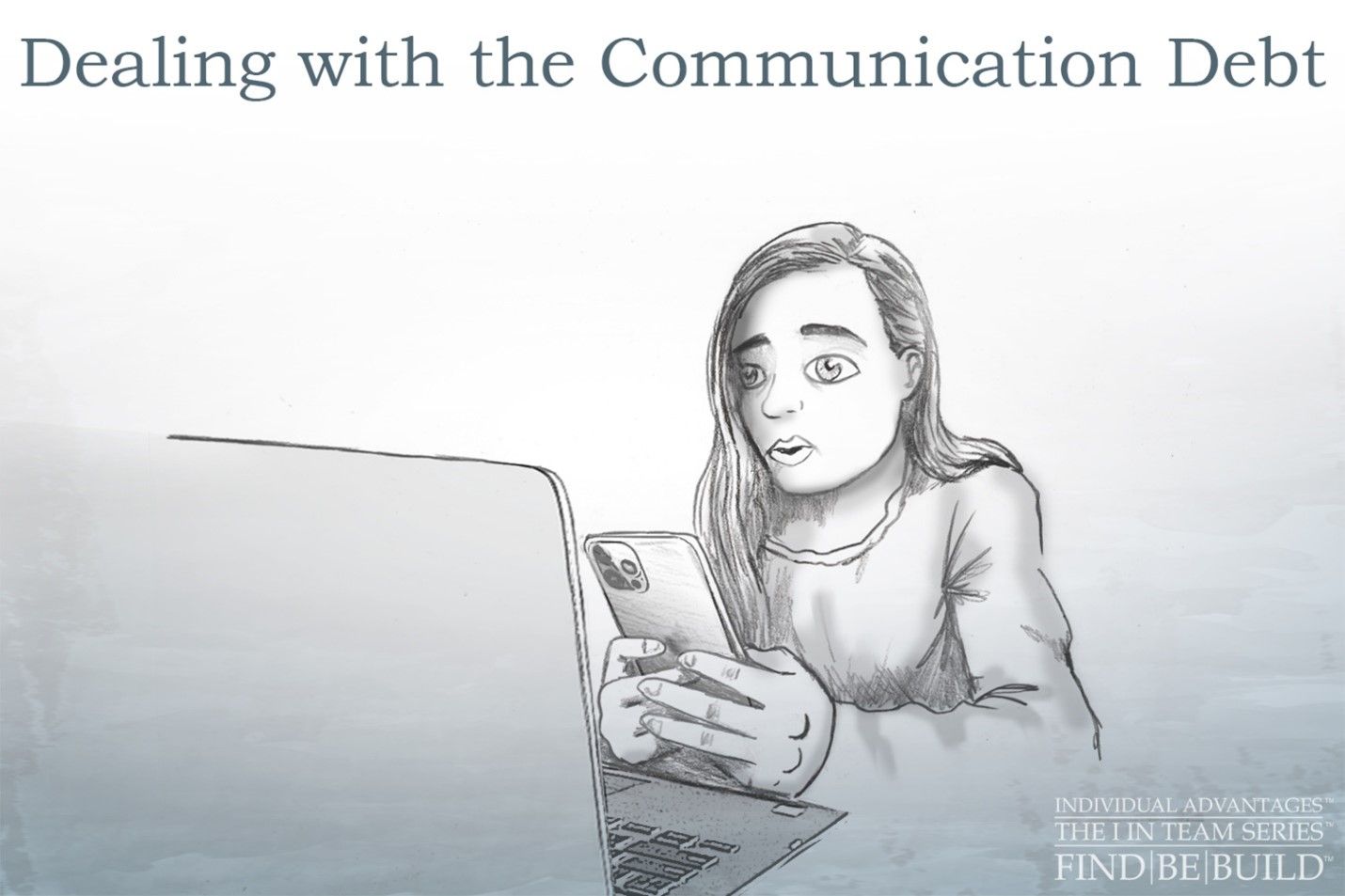
Hi team, Mary here! After almost a year of living in the pandemic, many of us are still finding ourselves burnt out, exhausted, and maybe even unmotivated. I’ve been asking myself how I can be feeling more burnt and stressed out than when the pandemic began, when I read an article discussing the communication debt. Communication debt isn’t a new concept, but it’s become much more severe as we have all entered working spaces that are far more digital than they once were.
Communication debt is, essentially, the negative emotions you feel when you are unable to respond to communications, whether they be emails, texts, direct messages, or even group chats. “Communication” refers to the various types of communication you receive throughout your day, and “debt” refers to the growing mound of responses you have to get to at some point. This can usually create feelings of anxiety or avoidance and can cause issues in productivity. Dealing with your personal communication debt will take some time, practice, and willpower. Below are our top tips for dealing with your communication debt.
Put the “No” in Notification
By this, I mean, turn off your notifications (I just couldn’t resist the catchy sub-header). You don’t always have to keep your notifications on. For me, it really disrupts my deep thought work if I see a message bubble pop up on my screen from Microsoft Teams or I hear an email come into my inbox. We discuss the issues of multitasking a lot on The I in Team Series, but even if you’re not intending to multitask you can experience the same issues of multitasking because of the communication debt. If you become distracted by a group thread, either on your phone personally or one you are included in at the office, that line of communication is forcing you to multitask as you either think of a way to respond or worry about having to respond to that later (adding a task to your to do list).
The best way to combat this issue is to silence your notifications! Utilize the technology you have to work with you and not against you. If you have children or those who depend on you for emergencies, set a special ringtone for them to go off only if they call you (and set this expectation that calls during business hours are for emergencies only). Use Do Not Disturb on your phone and anywhere else you can (I love DND on Teams). You don’t have to be available for everyone 24/7 and you shouldn’t be! This is where communicating healthy boundaries comes in.
Set Healthy Boundaries
Setting boundaries so that you can deal with communication debt more easily is better for everyone. When you set boundaries, you protect yourself and ensure you are getting what you need to be your best self. One example of a set boundary that is universal is the closed door. When someone’s door is closed, you know they are in Do Not Disturb mode. However, we don’t have the luxury of closing our door when we are all working from home and connected solely via technology. One way you can offset this is by either blocking time for yourself to answer emails and only answer emails during that time, or by blocking time for yourself to do deep mind work and then alerting everyone to those times. Be sure that if you block time for yourself to do deep mind work that you also set reminders for when that time block will end (or, ask someone to get you at a certain time).
Again, set the expectations you have with those around you. Healthy individuals will respect these boundaries and work with you to ensure all needs are taken care of on everyone’s terms. Sometimes you might have to sacrifice a little bit for the sake of your own comfort, but that’s okay! As long as those around you are doing their best to respect and acknowledge your boundaries, you are in good company. Plus, pushing yourself outside of your comfort zone is always encouraged to promote personal growth!
Conclusion
You might already have a system for tackling your communication debt, like zeroing out your inbox or unsubscribing from junk emails, but you’re always going to have more communications to respond to. Therefore, you need tactics to lessen the severity of the negative influence of the communication debt. First, you need to know yourself. Who are you and what do you need? Second, you need to love and respect yourself enough to set boundaries, including saying no to notifications. Finally, practice self-love. The world around us is becoming increasingly more demanding as we all work harder and longer days to keep up with that demand. If you practice self-love, know your worth, and strive to have a positive influence, you can tackle the negative effects of communication debt.